What matters in a pet-friendly floor
If you have a cat or dog, your floor has to work harder than most. Claws can scratch soft surfaces. Accidents need to be wiped up fast, before they soak in and leave a stain or a smell. Fur and hair build up between cleans, so a floor that is easy to sweep or vacuum saves you time every week.
Grip matters too. Older dogs, big dogs, and puppies can all slip and hurt themselves on floors that are very smooth or glossy. The best pet-friendly floor ticks four boxes: it resists scratches, it does not soak up spills or accidents, it is quick to clean, and it is not slippery underpaw.
The best pet-friendly flooring options
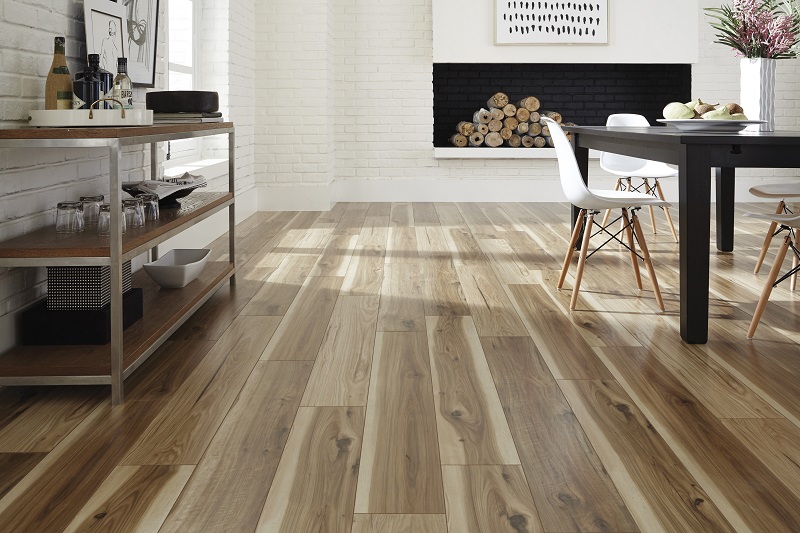
LVT (luxury vinyl tile) is the top choice for most homes with pets. It has a tough top layer that stands up well to claws, it does not soak up liquid, and you can wipe it clean in seconds. Pick one with a slightly textured, patterned surface rather than a plain, glossy one — the pattern hides small scratches and stray hairs between cleans, and the texture gives paws better grip.
Tile (ceramic or porcelain) is nearly impossible for claws to scratch, and it is fully waterproof, so accidents wipe away with no trace. Choose a tile with a slightly rough, non-slip finish rather than a shiny one, since smooth tile can be slippery for dogs. If your budget allows, underfloor heating under tile gives pets a warm spot to lie on, since tile itself can feel cold.
Laminate is a cheaper option that still resists scratches well, as long as you pick a board with a high durability rating (look for "AC4" or "AC5" on the packaging — the higher the number, the tougher the surface). The one thing to watch is water: laminate has thin seams between boards, and if an accident sits too long, moisture can seep in and make the boards swell. Clean up spills and accidents quickly and laminate will last well.
Engineered wood can work for calmer, older pets, especially with a hard-wearing lacquer finish. Active or younger pets will leave small claw marks over time, though this shows less on floors with a textured or darker finish. One advantage over solid wood is that engineered wood can usually be sanded and refinished later if it does get marked, so you are not stuck with the damage forever.
How pets actually damage a floor
It helps to know what you are protecting against. Dogs and cats cause floor damage in three main ways:
- Claws. Every step presses a dog's nails into the floor. Over months and years this can leave fine scratches on soft materials like solid wood or vinyl sheet flooring. Keeping nails trimmed short reduces this a lot.
- Accidents and spills. Urine is acidic and can discolour or damage floors that are not sealed properly, especially wood and some laminates. The faster you clean it up, the less damage it does.
- Hair and dander. This does not damage a floor, but it builds up in corners, under furniture, and in any texture or grout lines. Floors that are flat and smooth to sweep are far easier to keep clean than deep-pile carpet.
What to avoid
Carpet is the hardest flooring to keep clean with pets. It traps hair, holds onto smells, catches on claws, and soaks up any accidents right down to the underlay, where stains and odours are hard to fully remove. If you still want carpet somewhere in the house, keep it to a bedroom the pet does not use, and choose a stain-resistant, tightly looped carpet rather than a deep, soft pile.
Very shiny, glossy floors are also worth avoiding, even though they look smart in photos. They offer little grip, and a dog skidding on a polished floor can pull a muscle or become anxious about walking on it.
Tips to protect any floor from pets
Whatever flooring you choose, a few simple habits go a long way:
- Trim your pet's nails regularly, or ask a vet or groomer to do it if you are not confident.
- Wipe up accidents and spills as soon as you notice them, rather than leaving them to dry.
- Put a washable mat under food and water bowls to catch drips and spills.
- Add a doormat or rug by outside doors to catch mud, grit and rain before it reaches the main floor.
- Sweep or vacuum a couple of times a week to stop hair and dander building up in corners.
The verdict
For most homes with cats or dogs, LVT gives you the best mix of scratch resistance, easy cleaning and a warm feel underfoot. If you want the toughest possible surface and do not mind a harder, cooler floor, tile is very hard to beat. Laminate is a solid budget-friendly option as long as you stay on top of spills.