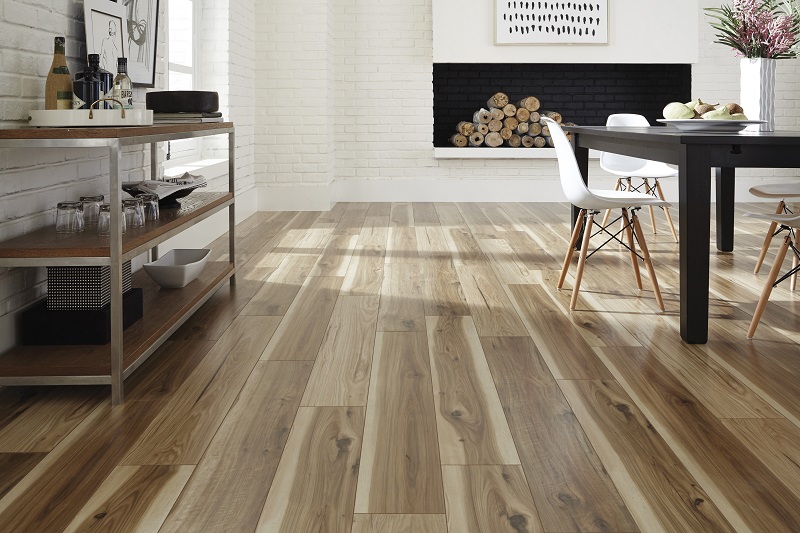
What matters in a kitchen floor
The kitchen is the hardest-working floor in most homes. Water gets splashed near the sink, oil and grease drip from the hob, and it is the room you probably walk through the most every day. On top of that, kitchens often hold heavy items like fridges and cookers, and things do get dropped — plates, pans, the odd knife.
Because of this, four things matter most: the floor needs to resist water, stand up to daily wear, be quick and easy to clean, and feel reasonably comfortable to stand on, since most of us spend a lot of time on our feet at the worktop or hob.
The best kitchen flooring options
LVT (luxury vinyl tile) is the best all-round choice for most kitchens. It does not let water through, it is warmer and quieter than a hard tile, and it holds up well to years of daily footsteps. It also comes in designs that look just like real wood or stone, so you do not lose the look you want.
Vinyl (sheet or click vinyl) is the budget-friendly option. It is fully waterproof and has a bit of give underfoot, so dropped plates and glasses are less likely to smash than on a hard floor. Sheet vinyl comes in large rolls with very few joins, which means fewer gaps for water to find its way through.
Tile (porcelain or ceramic) copes with water and heat better than any other option, and is extremely hard-wearing — a well-fitted tile floor can easily outlast the rest of the kitchen. The trade-off is that tile is hard and cold underfoot (underfloor heating fixes the cold part), and dropped items are more likely to break on it.
Engineered wood can work in a kitchen, which is something solid wood generally cannot do. Its layered construction is more stable when the air gets humid or damp, as long as any spills are wiped up quickly rather than left to sit. It brings a warm, natural look that vinyl and tile cannot fully copy, but it does need a little more care.
Kitchens and underfloor heating
Many people choose tile or LVT in the kitchen because both work well with underfloor heating, which takes the chill off a hard floor first thing in the morning. If you are planning a renovation and considering underfloor heating, it is worth deciding early, since it usually needs to go in before the new floor is laid. Ask your fitter which flooring types are approved for use with underfloor heating before you buy, as not every product is rated for it.
What to avoid
Carpet has no place in a kitchen. It soaks up spills, holds onto cooking smells, and is very hard to clean properly after any kind of accident. Standard laminate is risky too — water can get into the joints between boards and cause them to swell and lift over time. If you like the laminate look, look specifically for a "water-resistant" or "waterproof" laminate range, and even then, LVT usually performs better for the same money.
Tips before you choose
- Measure the room properly, including any awkward corners or under-cabinet gaps, before you request quotes.
- Ask what is underneath your current floor — old tile or uneven concrete may need extra preparation, which affects the price.
- If you are getting new kitchen units fitted too, decide on the flooring first, since some fitters lay flooring under the units and others fit around them.
- Check the slip rating of any tile you are considering, especially near the sink where the floor gets wet.
The verdict
For most UK kitchens, LVT gives you the best balance of looks, comfort and practicality for the price. Choose tile if you want the toughest possible surface and are adding underfloor heating, or engineered wood if a warm, natural look matters more to you than minimum upkeep.