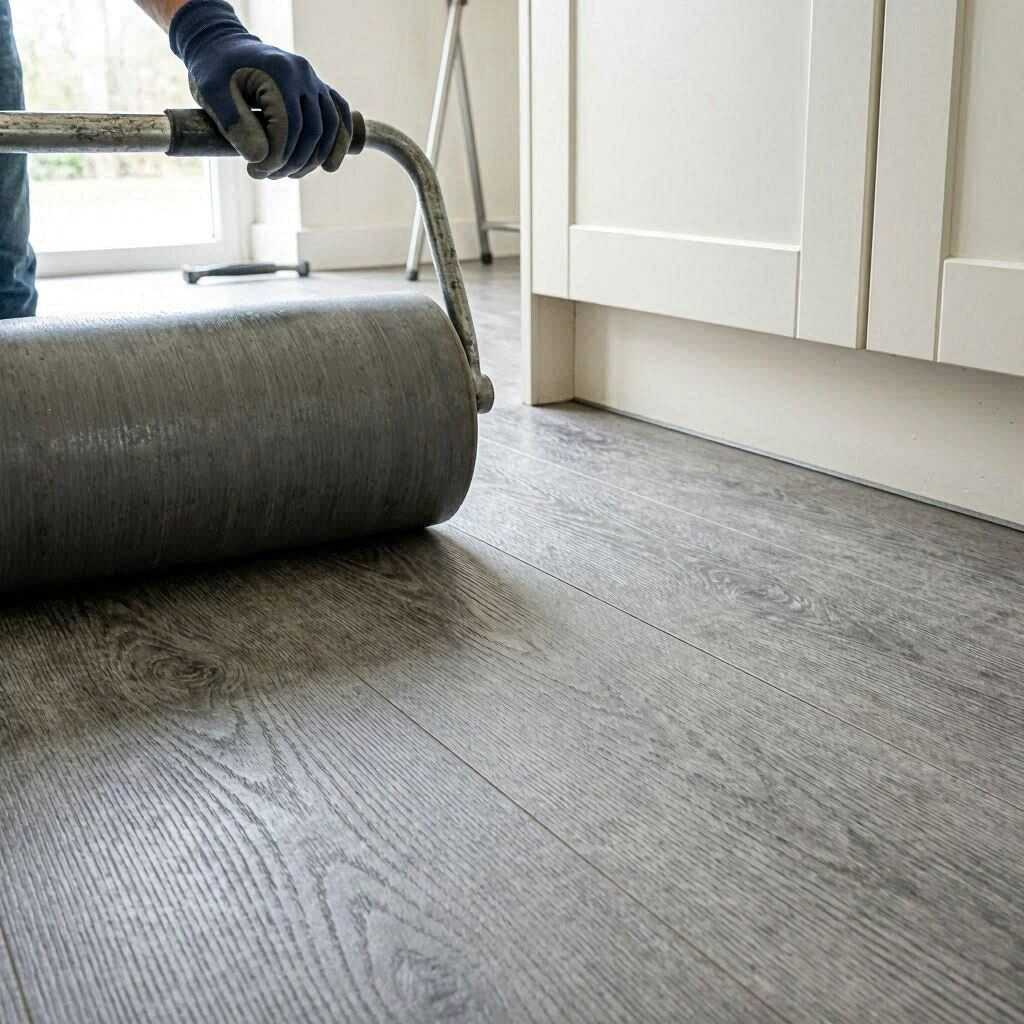
What matters in a bathroom floor
A bathroom floor deals with splashes, steam, and sometimes standing water if a bath overflows or a shower screen leaks. It also needs to stay safe to walk on with wet feet, which is not something you have to think about in most other rooms. Because of this, waterproofing comes first, safe grip comes second, and warmth and looks come after that.
Unlike a kitchen, where water is mostly the odd splash or spill, a bathroom can see real standing water, especially around the bath or shower. This means the bar for waterproofing is higher here than almost anywhere else in the home.
The best bathroom flooring options
Sheet vinyl is the most practical choice for most bathrooms. It comes in large rolls, so there are few or no joins where water could get underneath. It is fully waterproof, comes in slip-resistant finishes for safety, and feels warmer and softer underfoot than a hard tile.
LVT (luxury vinyl tile) gives you a more premium wood or stone look while still resisting water well. As long as it is fitted correctly with the joints properly sealed, it performs very well in a family bathroom and looks a step up from standard sheet vinyl.
Tile (porcelain or ceramic) is the classic bathroom choice, and when it is grouted and sealed properly, it is the most waterproof option of all. Look for a tile with a slip-resistance rating, and pair it with underfloor heating if you can, since tile on its own can feel cold and hard on bare feet.
Staying safe on a wet floor
Because bathroom floors get wet so often, slip resistance matters as much as waterproofing. Manufacturers rate floor safety using a slip-resistance rating — ask for this when comparing tile or vinyl options, and avoid anything described as high-gloss or polished for a bathroom. A slightly textured or matt finish grips much better underfoot when wet, which matters most for children and older family members.
What to avoid
Carpet and standard laminate should be avoided in a bathroom. Carpet soaks up moisture and can grow mould underneath if it stays damp, while standard laminate swells and warps where water gets into the joints between boards. Solid wood is a poor fit too — the steam and splashes in a bathroom cause it to warp and cup out of shape over time, even with a good sealant.
The verdict
For most bathrooms, sheet vinyl gives you the best waterproofing for the price. LVT is a good upgrade if you want a more premium look without giving up much water resistance. Tile is the right choice if you want maximum durability and are pairing it with underfloor heating to keep it comfortable underfoot.